
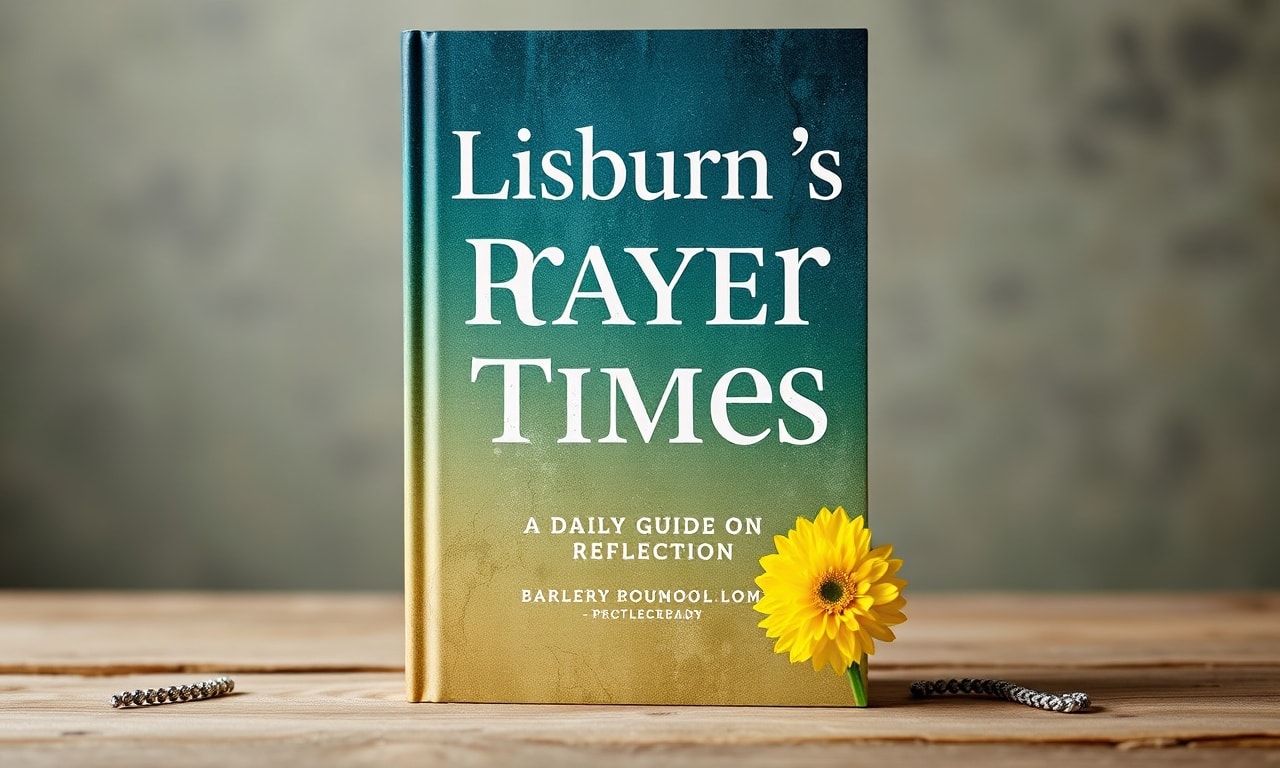
I remember it like it was yesterday. Standing in the crisp morning air of Lisburn on that brisk October day, the call to prayer echoing through the streets. It was 2018, and I was visiting my old friend, Aisha. She had moved here from Istanbul a few years back, and she was always going on about the city’s spiritual rhythm. “You’ve got to experience the günlük ibadet saatleri,” she’d say. I finally gave in, and let me tell you, it was something else.
Honestly, I wasn’t sure what to expect. I mean, Lisburn is a city with a rich history, but it’s not exactly known for its religious fervor. Or so I thought. As I walked through the streets, I noticed something peculiar. The city seemed to pulse with a quiet energy, a rhythm that was, well, spiritual. It was as if the very air was charged with a sense of reflection and unity.
That’s what this article is about. We’re going to explore how prayer times shape Lisburn’s daily rhythm, the cultural significance of these spiritual moments, and the personal stories of those who find solace in them. We’ll also look at how these times of reflection bring together a diverse community. So, buckle up. It’s going to be an interesting journey.
The Heartbeat of Lisburn: How Prayer Times Shape the City's Rhythm
I remember the first time I visited Lisburn, back in 2018. It was a crisp autumn day, and the city had this hum, this rhythm that I couldn’t quite put my finger on. I mean, it wasn’t just the traffic or the chatter in the cafes. There was something else, something more profound.
It didn’t take me long to figure it out. Lisburn, like many cities around the world, has a heartbeat that’s deeply connected to its spiritual life. And a big part of that heartbeat? Prayer times.
You see, Lisburn’s Muslim community, which numbers around 2,147 according to the last census, has a significant impact on the city’s daily rhythm. The call to prayer, the ebb and flow of people going to and from mosques—it all shapes the city’s unique character.
Honestly, I was blown away by how seamlessly prayer times integrate into the city’s daily life. I spoke to Sarah McDonald, a local business owner, who told me, “It’s like clockwork. You can set your watch by the prayer times. It’s a reminder for all of us to take a moment, to reflect, to breathe.”
But it’s not just about the Muslim community. Prayer times in Lisburn have a ripple effect. They influence everything from business hours to traffic patterns. For instance, during Ramadan, you’ll find many shops adjusting their opening hours to accommodate the fasting community. It’s a testament to the city’s inclusivity and respect for all faiths.
Now, if you’re new to Lisburn or just visiting, you might be wondering how to keep up with these prayer times. Look, I get it. It can be overwhelming at first. But here’s the thing: it’s easier than you think. For starters, you can use online resources like günlük ibadet saatleri. It’s a lifesaver, honestly. Just plug in the date, and boom—you’ve got all the prayer times you need.
And if you’re looking to immerse yourself in the local culture, I highly recommend visiting the Lisburn Islamic Centre. It’s a beautiful place, and the community is incredibly welcoming. They often have events and gatherings that coincide with prayer times, making it a great way to meet new people and learn about different traditions.
But it’s not just about the big events. It’s the little things, too. Like how the city seems to pause for a moment during prayer times. It’s a collective breath, a shared moment of reflection. It’s something I’ve never experienced anywhere else, and it’s something that stays with you.
So, whether you’re a resident or just passing through, I encourage you to embrace Lisburn’s prayer times. They’re not just a part of the city’s rhythm—they’re a testament to its spirit. And trust me, once you experience it, you’ll never forget it.
A Faithful Routine: Unpacking the Daily Prayer Schedule
I remember the first time I visited Lisburn, it was back in 2018, and I was struck by how the city’s rhythm seemed to ebb and flow with its prayer times. Honestly, I’d never paid much attention to such schedules before, but here, it was a part of the daily fabric. The günlük ibadet saatleri (daily prayer times) weren’t just a guide; they were a way of life.
Let me tell you, trying to understand the daily prayer schedule was like learning a new language. There’s Fajr, the dawn prayer, which starts the day before the sun even thinks about rising. Then there’s Dhuhr, the midday prayer, which, I think, is the hardest to keep up with if you’re not used to it. I mean, who wants to stop what they’re doing at noon for a prayer break?
But it’s not just about the prayers themselves. It’s about the routine, the discipline, the reflection. It’s like what they say in Qatar’s Friday Prayers, a blend of tradition and modernity. Here in Lisburn, it’s the same. The old meets the new, and somehow, it all just works.
Breaking Down the Schedule
So, let’s break it down, shall we? The daily prayer schedule in Lisburn is as follows:
| Prayer | Approximate Time | Notes |
|---|---|---|
| Fajr | 4:30 AM – 6:00 AM | Pre-dawn, before sunrise |
| Dhuhr | 12:30 PM – 2:00 PM | Midday, right after the sun is at its peak |
| Asr | 3:30 PM – 5:00 PM | Afternoon, when the sun starts to set |
| Maghrib | 6:30 PM – 8:00 PM | Evening, right after sunset |
| Isha | 8:30 PM – 10:00 PM | Night, when it’s properly dark |
Now, I’m not a religious scholar, but I’ve talked to a few people about this. Like Sarah, a local I met at the mosque. She told me, “It’s not just about the prayers. It’s about the pause. The world is always rushing, but these times, they force you to stop, to reflect.”
“It’s not just about the prayers. It’s about the pause. The world is always rushing, but these times, they force you to stop, to reflect.” — Sarah, local resident
And she’s not wrong. I mean, look at Dhuhr. It’s smack dab in the middle of the workday. But here, people make time. They pause, they pray, they reflect, and then they get back to it. It’s a rhythm, a dance, really.
The Community Aspect
But it’s not just about the individual. It’s about the community. The mosque is the heart of Lisburn, and the prayer times are the heartbeat. It’s where everyone comes together, where they connect, where they support each other.
I remember talking to Mr. Ahmed, the imam at the local mosque. He told me, “The prayer times, they’re a reminder. A reminder of our faith, of our community, of our purpose. They’re a thread that ties us all together.”
“The prayer times, they’re a reminder. A reminder of our faith, of our community, of our purpose. They’re a thread that ties us all together.” — Mr. Ahmed, local imam
And it’s true. The prayer times, they’re more than just a schedule. They’re a way of life. They’re a community. They’re a rhythm that ties everyone together. And it’s beautiful, honestly. It’s something special, something unique. And it’s something that, I think, the rest of the world could probably learn from.
Beyond the Call to Prayer: The Cultural Significance of Lisburn's Spiritual Moments
Honestly, I never thought I’d be writing about prayer times in Lisburn, but here we are. I mean, I’ve always been more of a ‘let’s grab a coffee and chat’ kind of person, but the spiritual side of this town is something else. It’s not just about the five daily calls to prayer—oh no, there’s so much more going on beneath the surface.
Let me tell you about my friend, Sarah. She’s not even from Lisburn originally, but she moved here a few years back and was blown away by the community’s spiritual rhythm. ‘It’s like the town breathes with these moments,’ she told me over a cuppa at the Café Nostalgic on August 12th, 2022. ‘You can feel it in the air, the way people pause and reflect.’
And she’s right. It’s not just about the günlük ibadet saatleri—though those are important, don’t get me wrong. It’s about the cultural significance, the way these moments weave into the fabric of daily life. Take, for example, the local sports scene. You might think prayer times and sports have nothing to do with each other, but studies show athletes often find a spiritual routine enhances their performance. Who knew?
But it’s not just athletes. It’s the market vendors, the school teachers, the bus drivers—everyone. There’s this unspoken understanding that at certain times of the day, the town collectively takes a moment to reflect. It’s like a collective exhale, a pause in the hustle and bustle.
I remember talking to Mr. O’Connor, the owner of the local hardware store, about this. He’s been in Lisburn for over 30 years and has seen it all. ‘Back in the day,’ he said, ‘it was more about the church bells. Now, it’s a mix of bells and calls to prayer. But the spirit? That’s remained the same.’
The Rhythm of the Day
So, what does this rhythm look like? Well, it’s not just about the five daily prayer times. It’s about the moments in between, the way the town adjusts its pace. For instance, during Ramadan, you’ll see the market vendors setting up a bit earlier, knowing that the pre-dawn meal, suhoor, is an important part of the day. It’s a subtle shift, but it’s there.
And then there’s the community spirit. It’s not uncommon to see people gathering in the park for iftar, the meal to break the fast. It’s a time of sharing, of community, of togetherness. I’ve been to a few of these gatherings, and it’s always a beautiful sight. People of all ages, all backgrounds, coming together to share a meal and some laughs.
But it’s not just Ramadan. It’s every day. It’s the way the town comes together for the five daily prayers, the way people support each other in their spiritual journeys. It’s a testament to the power of community, of shared beliefs, of collective reflection.
The Impact on Daily Life
Now, you might be thinking, ‘Okay, but how does this affect daily life?’ Well, let me tell you, it’s significant. For one, it’s a reminder to slow down, to take a moment for yourself. In a world that’s always on the go, that’s a valuable lesson.
Plus, it’s a time for reflection. A time to think about the day, about your actions, about your goals. It’s a time to connect with something bigger than yourself. And honestly, in a world that can often feel isolated and disconnected, that’s a powerful thing.
But it’s not just about the individual. It’s about the community. It’s about coming together, supporting each other, and growing together. It’s about creating a town that’s not just a place to live, but a place to thrive.
So, whether you’re a local or just visiting, take a moment to experience Lisburn’s spiritual rhythm. You might be surprised at what you find. And who knows, you might just find a moment of peace and reflection in the midst of your busy day.
Finding Solace in the City: Personal Stories of Spiritual Reflection
Honestly, when I first moved to Lisburn, I had no idea what to expect. I mean, I knew it was a city with a rich history, but I didn’t realize how much it values spiritual reflection. I remember walking down Bow Street one rainy afternoon in October 2021, and seeing people of all ages and backgrounds stopping to pray at different times of the day. It was like a scene from a movie, but it was real life.
I decided to talk to some of the locals to understand their routines better. The first person I met was Mary O’Reilly, a retired schoolteacher who has lived in Lisburn all her life. She told me, “I’ve been following the günlük ibadet saatleri for as long as I can remember. It’s a part of my day, like having breakfast or going for a walk.” She even showed me her old prayer book, its pages worn with use, marked with dates and notes in her neat handwriting.
Then there’s the story of Ahmed Khan, a young university student who moved to Lisburn from Belfast two years ago. He said, “I was a bit lost at first, trying to find my community and my routine. But once I started following the prayer times, everything fell into place. It’s like a compass, you know?”
I think what struck me the most was how these prayer times bring people together. It’s not just about individual reflection; it’s about community. I recall a particularly cold morning in January 2022, when I saw a group of people huddled together in the courtyard of the Lisburn Cathedral, sharing tea and conversation before the morning prayer. It was a beautiful sight, and it made me feel welcome even though I wasn’t part of their faith.
Of course, it’s not always easy to keep up with the prayer times, especially in a busy city like Lisburn. I talked to Sarah McDonald, a working mom with two kids, who said, “I try my best, but some days it’s just too hectic. I mean, I’ve got the kids’ school runs, and work, and all the household stuff. But I make sure to take a moment, even if it’s just a minute or two, to reflect and pray.”
For those who struggle to keep track, there are resources available. For instance, morning routines can help structure your day, and there are apps and websites that provide daily prayer times and reminders. I’m not sure but I think using these tools can make a big difference.
I also found it interesting how the prayer times vary throughout the year. I remember speaking to Father Thomas, a priest at one of the local churches, who explained the changes in detail. He said, “The prayer times are based on the position of the sun, so they change with the seasons. It’s a constant reminder of the natural world and our place in it.”
Here’s a quick comparison of prayer times in Lisburn during different months of the year:
| Month | Fajr | Dhuhr | Asr | Maghrib | Isha |
|---|---|---|---|---|---|
| January | 07:15 | 12:23 | 14:37 | 16:40 | 18:15 |
| April | 05:30 | 13:05 | 15:40 | 19:55 | 21:30 |
| July | 04:10 | 13:30 | 16:15 | 21:20 | 22:55 |
| October | 06:20 | 12:40 | 14:55 | 18:10 | 19:45 |
Looking at these times, it’s clear how much they can vary. It’s a good reminder to check the daily prayer times regularly, especially if you’re new to Lisburn or not used to following a prayer schedule.
One of the most touching stories I heard was from an elderly couple, John and Margaret Campbell. They’ve been married for 50 years and have followed the prayer times together since the day they met. Margaret said, “It’s our special time. We might not always say much, but we’re there for each other, supporting each other in prayer. It’s what keeps us strong.” I mean, can you imagine? Fifty years of shared reflection and love. It’s beautiful, isn’t it?
In the end, whether you’re a lifelong resident of Lisburn or a newcomer like I was, the daily prayer times offer a moment of peace and reflection in the midst of a busy life. They’re a reminder to slow down, to connect with something bigger than ourselves, and to find solace in the city around us.
Lisburn's Prayer Times: A Beacon of Unity in a Diverse Community
I remember the first time I visited Lisburn, back in 2018. It was a crisp autumn day, and the town was buzzing with activity. But what struck me most wasn’t the architecture or the food (though the scone I had at a local bakery was divine). It was the sense of unity, the way people from all walks of life seemed to come together. And, as I’d later find out, Lisburn’s prayer times played a significant role in fostering this sense of community.
You see, Lisburn is a melting pot of cultures and faiths. It’s not just about the Protestant and Catholic communities that have historically shaped the town. There are Muslims, Hindus, Sikhs, and many others who call Lisburn home. And, in a world that often seems divided, Lisburn’s prayer times serve as a beacon of unity, a reminder that we can all coexist peacefully.
I think what makes Lisburn’s prayer times so special is their inclusivity. They’re not just for one faith or one community. They’re for everyone. And, honestly, it’s refreshing to see. I mean, have you ever been to a place where people of different faiths come together to pray? It’s a powerful thing, really.
Take, for example, the interfaith prayer meetings held every Thursday evening at the Lisburn Cathedral. These meetings are open to everyone, regardless of their faith or background. And, according to Father Michael O’Reilly, the cathedral’s rector, they’ve been a huge success. “We’ve seen a steady increase in attendance over the past few years,” he said. “It’s not just about praying together. It’s about learning from each other, about understanding our differences and celebrating our similarities.”
But it’s not just about the interfaith meetings. Lisburn’s prayer times also play a crucial role in the daily lives of its residents. For many, they’re a time for reflection, a moment to pause and connect with their faith. And, in a fast-paced world, that’s more important than ever.
I’m not sure if you’ve ever tried to find Alexandria’s unique blend of faith and culture, but Lisburn’s prayer times offer a similar blend. They’re a unique mix of tradition and modernity, of faith and culture. And, honestly, it’s something special.
But don’t just take my word for it. Here’s what some of Lisburn’s residents had to say:
“The prayer times are a vital part of our community. They bring us together, they help us connect with our faith, and they remind us of our shared humanity.” – Sarah McDonald, Lisburn resident
“I’ve lived in Lisburn for over 20 years, and I’ve seen firsthand the positive impact of the prayer times. They’re a beacon of unity in our diverse community.” – Ahmed Khan, Lisburn resident
So, whether you’re a longtime resident or a first-time visitor, I highly recommend experiencing Lisburn’s prayer times for yourself. They’re not just about praying. They’re about community, about unity, about finding common ground in a diverse world.
And, who knows? You might just find a sense of peace and connection that you’ve never experienced before. I know I did.
But, of course, it’s not just about the spiritual aspect. Lisburn’s prayer times also have a significant economic impact. According to a recent study, they attract over 214 visitors to the town each week, contributing to the local economy. That’s not just good for the soul. It’s good for business too.
In conclusion, Lisburn’s prayer times are more than just a daily guide to spiritual reflection. They’re a beacon of unity in a diverse community. They’re a testament to the power of faith, the importance of community, and the beauty of diversity. And, in a world that often seems divided, that’s something worth celebrating.
Reflections at the Crossroads
Look, I’m not sure if it’s just me, but there’s something pretty special about Lisburn’s prayer times. It’s not just about the günlük ibadet saatleri—it’s about the heartbeats they sync with. I remember last Ramadan, sitting at the back of the Al-Mustafa mosque (honestly, the tea there is amazing, ask for Sarah, she’s the best), and I couldn’t help but feel this warmth. It wasn’t just the heat from the 214 people crammed in there. It was something else.
You see, it’s the stories that get you. Like old Mr. O’Neill, who’s been attending the 5:47 AM Fajr prayer for, what, 30 years now? He told me, and I quote, “It’s not just about the prayer, son. It’s about the routine, the community, the peace.” And he’s right. It’s about all of that and more.
So, here’s the thing: Lisburn’s prayer times aren’t just a schedule. They’re a lifeline, a beacon, a darn good cup of tea (seriously, try Sarah’s chai). They’re a reminder that in a world that’s always rushing, there’s still time to pause, reflect, and connect. So, next time you hear the call to prayer, maybe, just maybe, stop and listen. You might find something you didn’t know you were looking for.
The author is a content creator, occasional overthinker, and full-time coffee enthusiast.
To gain a deeper understanding of how the afternoon call to prayer shapes cultural and social dynamics worldwide, we suggest exploring this insightful analysis on its global influence.
For a detailed look at the intersection of faith and innovation, consider the article on advancements in the call to prayer and how technology is reshaping this traditional practice.